The Long Way Round
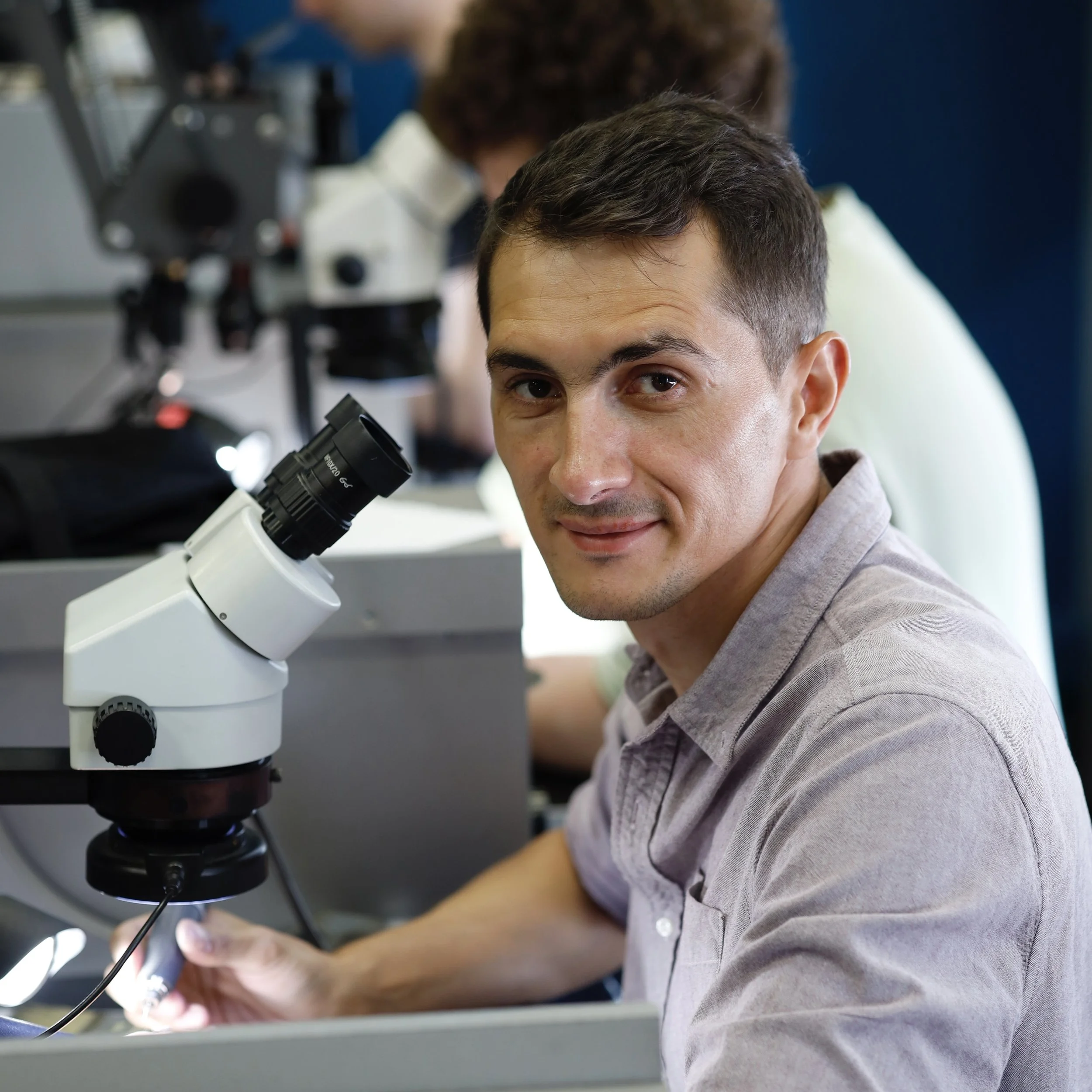
I fell in love with jewellery early. It started at the bench — showing up every day, learning the basics, making mistakes and correcting them.
The first thing I understood about jewellery was metal. How it responds to heat, how it gives you just enough control if you know what you're doing. And then stones — small, precise, permanent. The combination of the two is what kept me at the bench.
Tashkent was where it all began. I helped build a small jewellery studio from nothing — sourcing materials, training apprentices, fixing pieces others had written off. Unglamorous work most of the time. But it taught me what no course ever could: what it actually means to be responsible for a piece from start to finish.
New York didn't just sharpen my skills — it gave me something harder to teach. A genuine love for the work itself. The pace was relentless, the standards were high, and custom goldsmithing there left no room for shortcuts. I stopped thinking of jewellery as a job somewhere in that city. It became something I cared about deeply.
Budapest slowed everything down — and that was exactly what I needed. Deep bench work, complex techniques, hours spent on pieces that demanded real precision. It built my confidence and steadied my hands in ways that speed never could.
London gave me the desire to start something of my own. After nine workshops across four countries and three continents, I finally opened my own studio. And that changes everything about how you approach the craft — when it's yours, every decision means something different.
Lifelong Learning
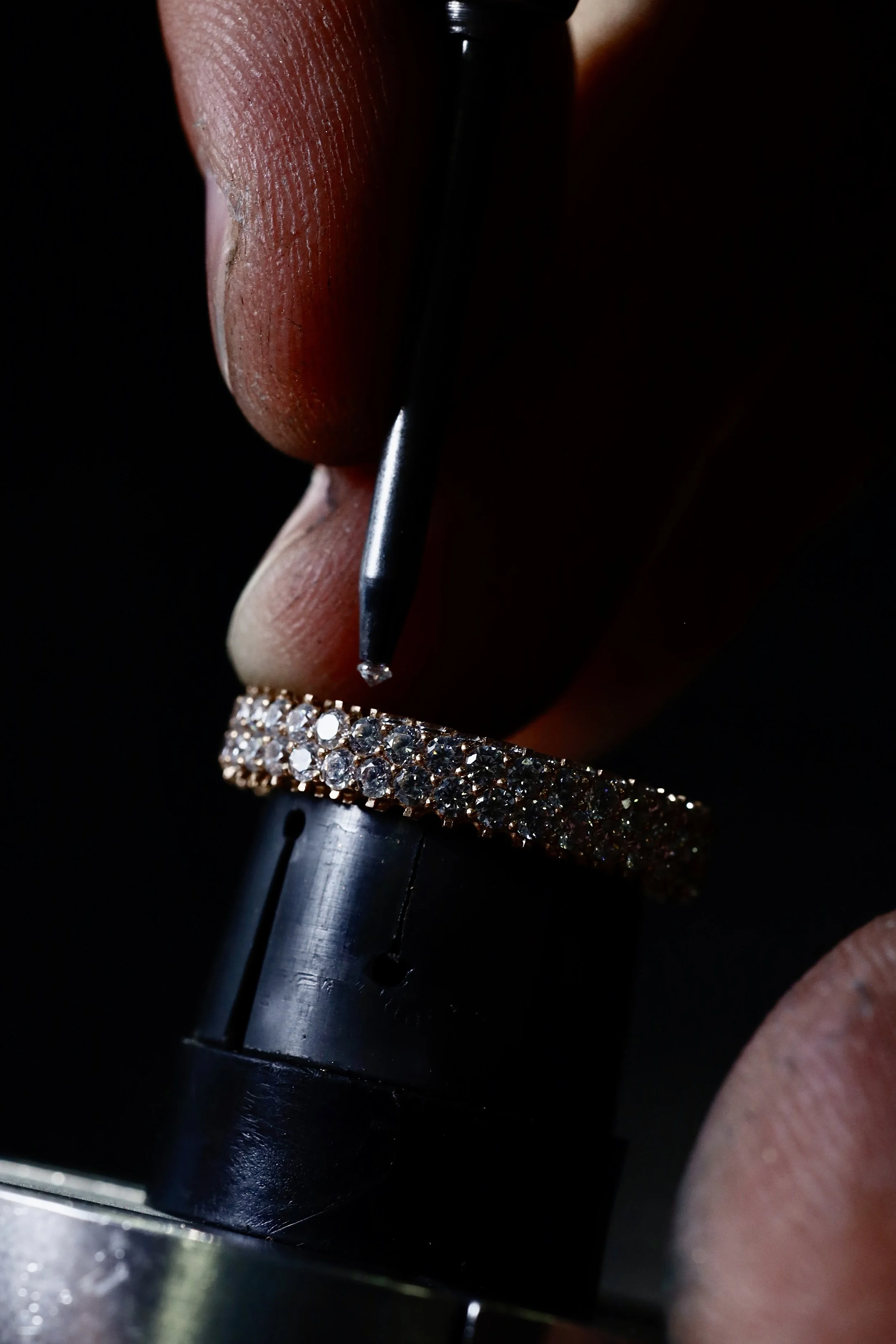
At a certain point I realised that what I knew wasn't enough. Not because I was doing bad work — but because I could see the gap between where I was and where I wanted to be. That gap bothered me. It still does.
So I went looking for people who were better than me. Courses in St. Petersburg and Magnitogorsk, private sessions with masters who didn't soften their feedback. It wasn't comfortable. It wasn't supposed to be. Micro pavé, fantasy pavé, complex stone setting — each technique took time, repetition, and the willingness to start again when something wasn't right. I've lost count of how many times I've redone something that most people would have considered finished.
The standard you accept in your own work is a choice. I made that choice early — and I've had to keep making it every time I sit down at the bench.
That pursuit of a higher standard never really switched off. It just changed form. Now, alongside my own work, I teach 1:1 stone setting courses in my London studio. Jewellers and serious learners who want to reach a professional level — people who feel that same gap and want to close it. Teaching turned out to be its own kind of learning. You understand something differently when you have to explain it to someone else. When you have to find the words for something your hands have always just known.
There is always another level. A steadier hand, a cleaner line, a stronger setting. I have never felt finished at this craft. I don't expect I ever will. And honestly — I wouldn't want to.
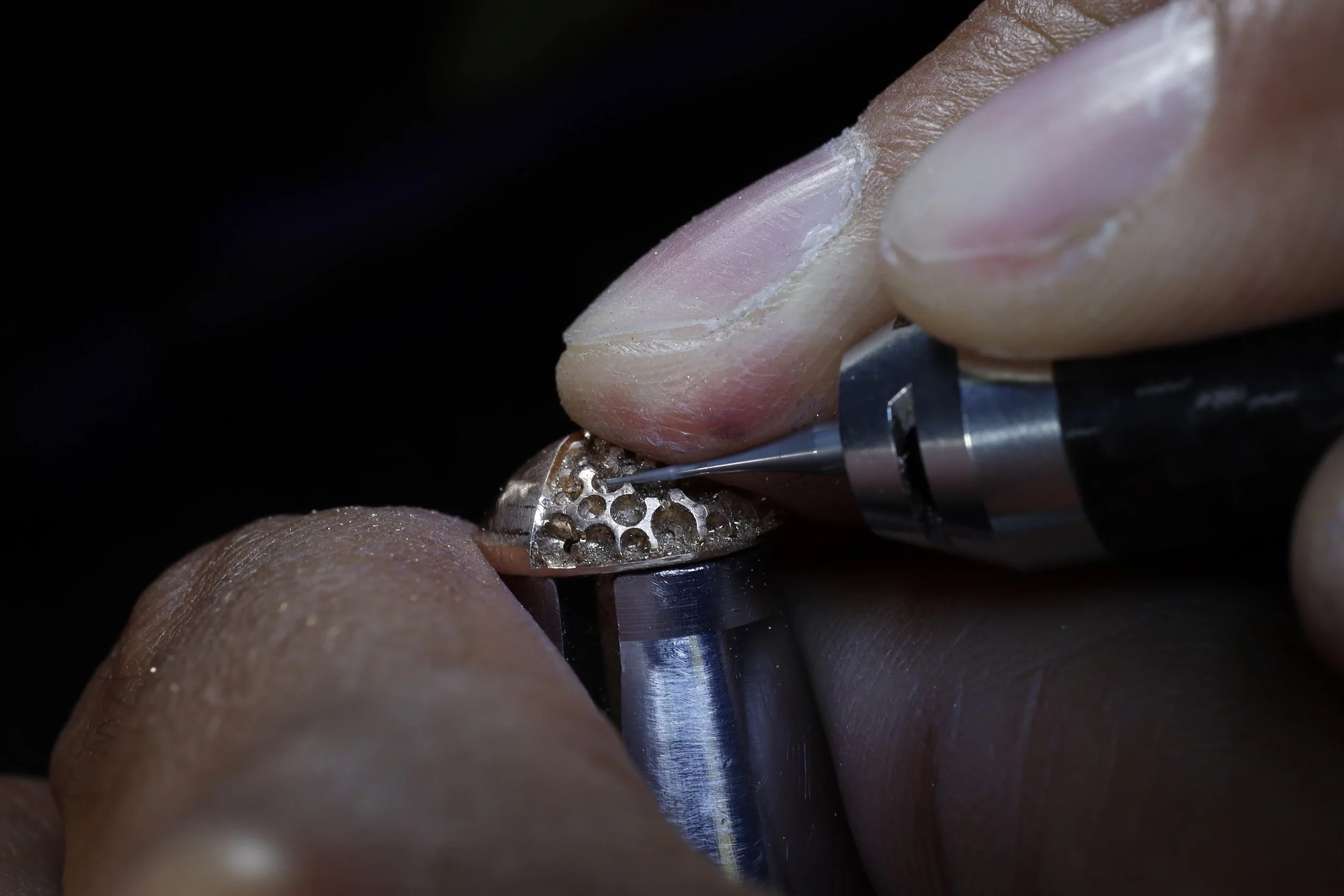
Materials Matter
I only work with materials I can trace. Not because it's good for marketing — but because I couldn't work any other way.
The jewellery industry has a complicated relationship with transparency. I've seen enough of it to know that the story behind a stone matters as much as the stone itself. Where it was mined, who handled it, what it cost to bring it to the surface — these things don't disappear just because nobody asks about them. So I ask. Every time.
I source carefully. No conflict diamonds. No stones I can't account for. If I don't know where something comes from, it doesn't go into my work. That's a simple rule, and I've never felt the need to make an exception.
Every piece I make carries the weight of those decisions — the years, the cities, the standards I've set for myself. I make jewellery for people who care about that. Who want to wear something that was made right, from materials that were sourced right, by someone who took the time to make sure.
That's the only kind of work I'm interested in doing. And it's the only kind I know how to do honestly.
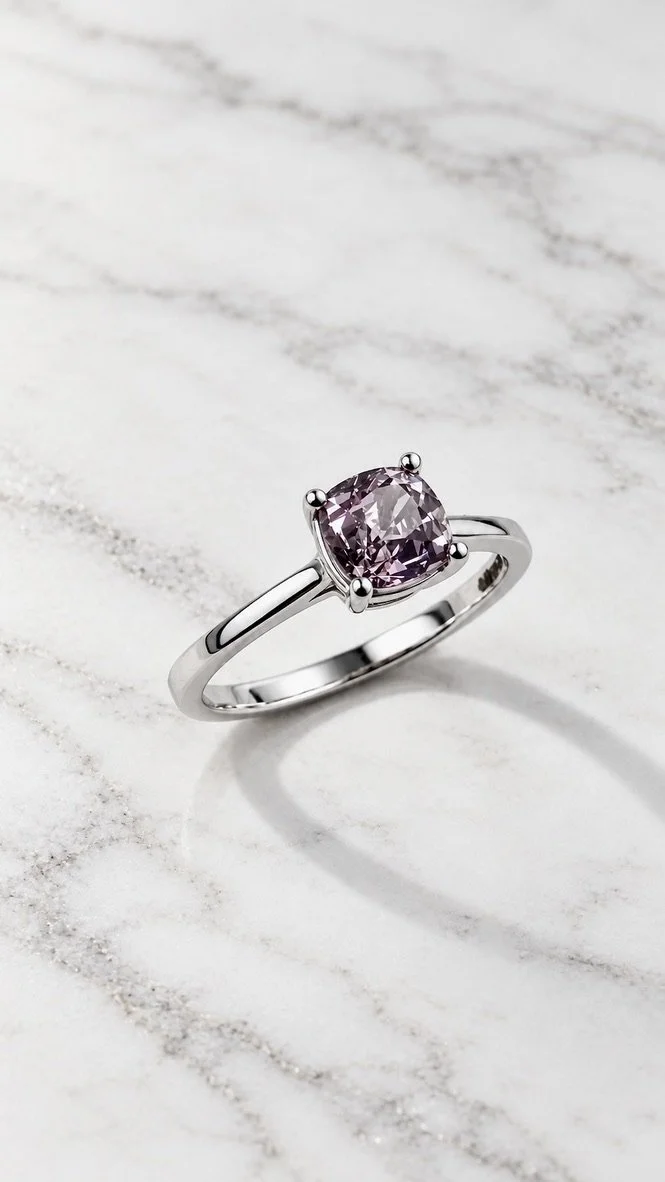
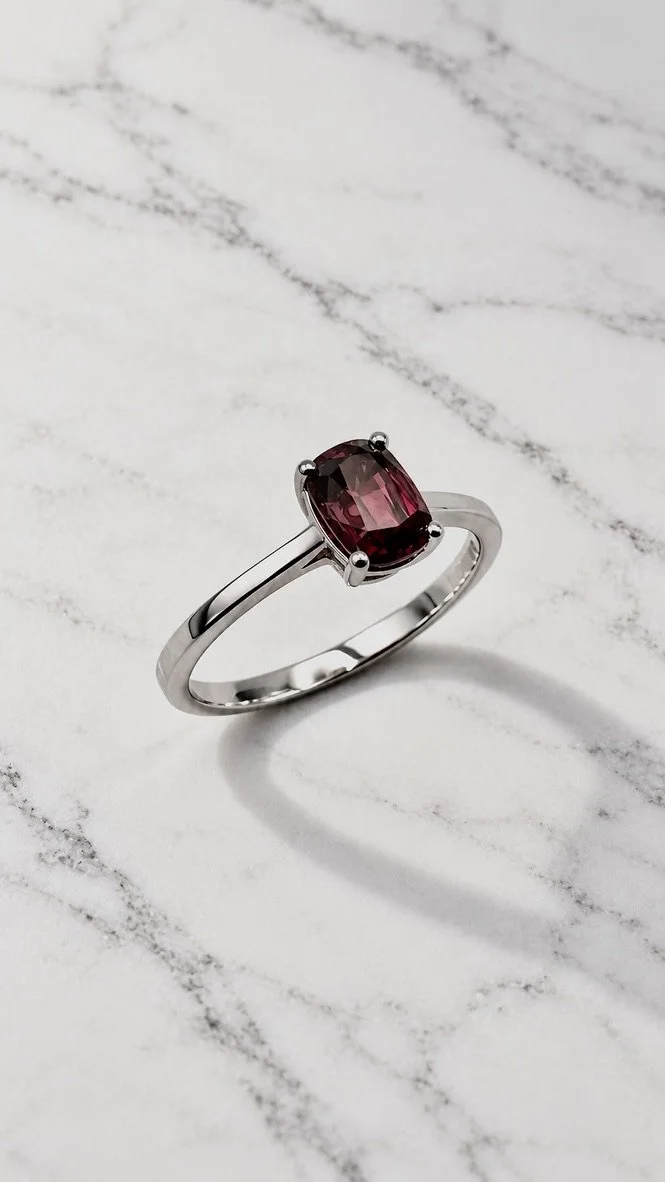
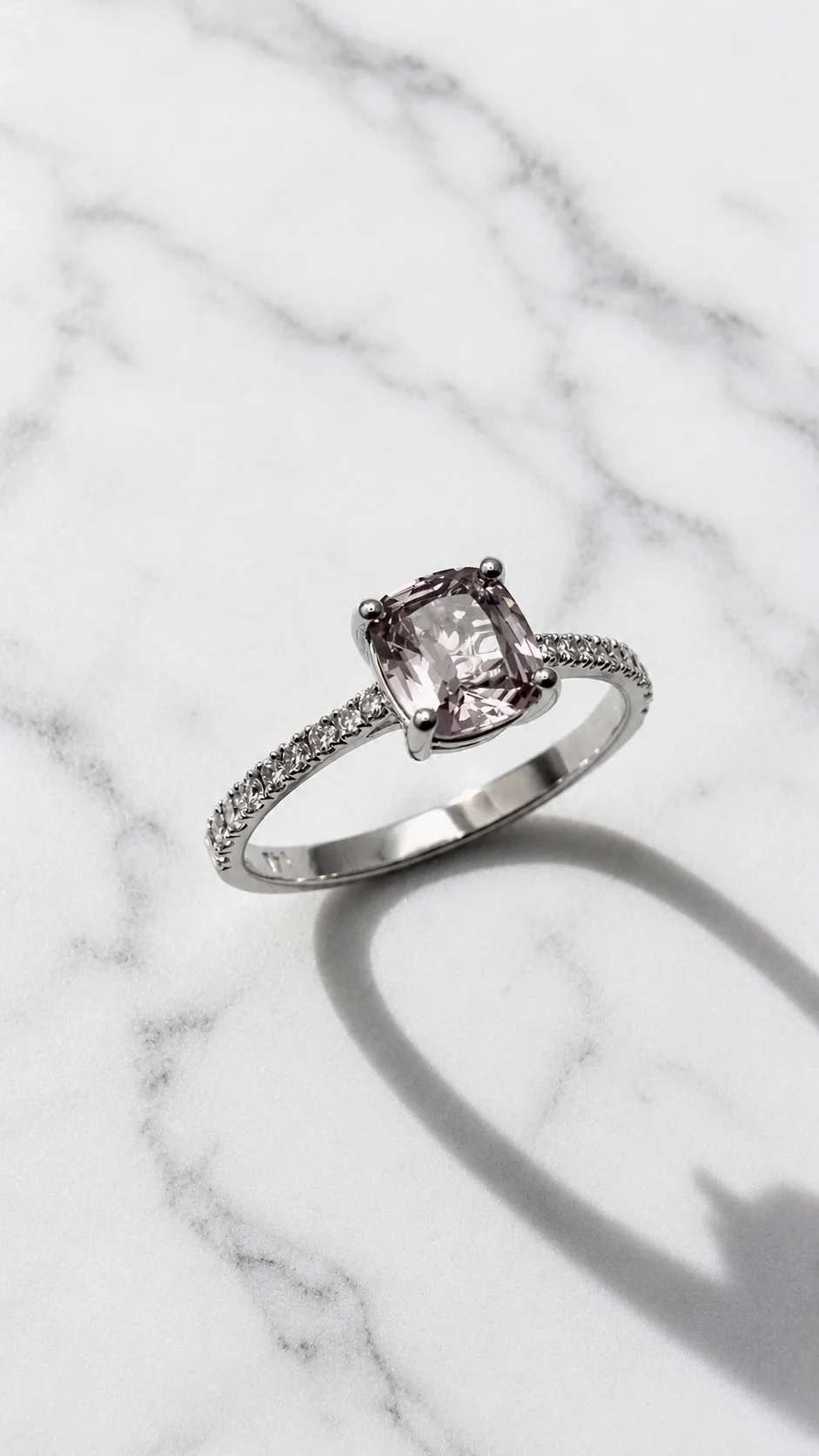
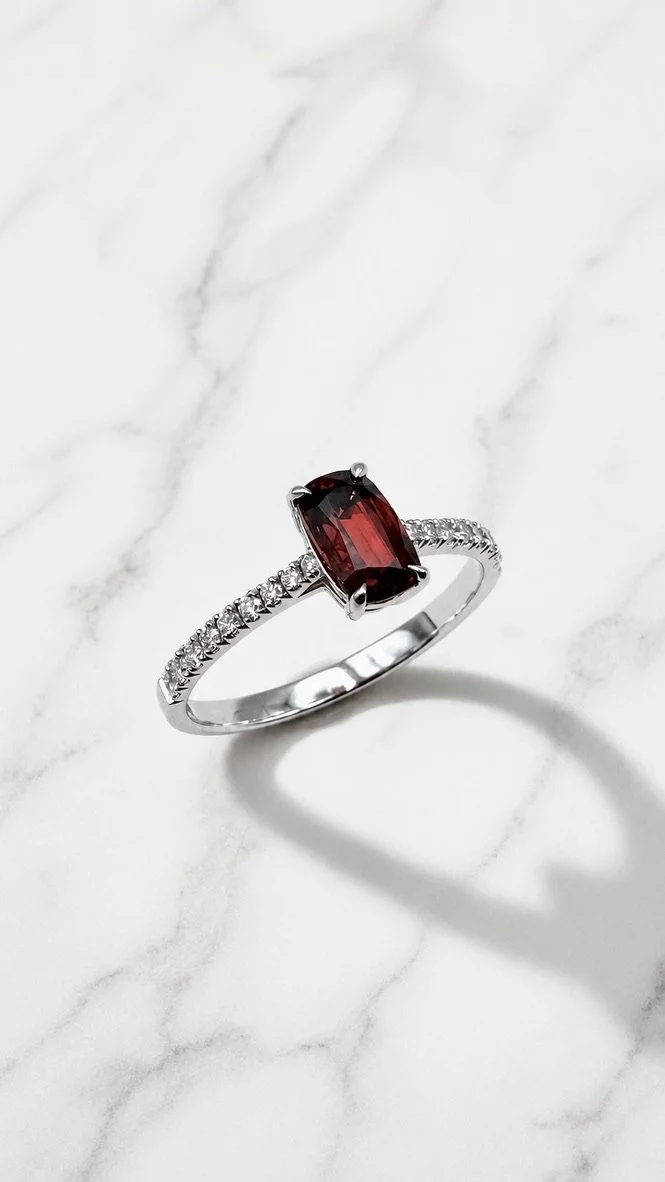
No subtlety here. The magenta spinel is electric — the kind of colour that stops people mid-sentence.
Natural magenta spinel — untreated, no heat, no enhancement.
Sourced in Burma, cut and polished in Thailand.
1.17ct · cushion cut · eye-clean
Spinel is one of the most underrated gemstones in fine jewellery — rarer than sapphire in many colours, naturally vivid, and never treated.
14K / 585 white gold · castle-style micro-pavé band
0.16ct lab-grown diamonds, hand-set under magnification
Gold weight: 1.56g
Hallmarked by the London Assay Office — guaranteed purity, recognised worldwide.
Size: UK/AUS N½ | US/CANADA 7 | EU 55 | 17.5mm
Resizing available — message me before ordering.
Every ring is made by hand in my London workshop. Not mass-produced. Not outsourced.
Conflict-free diamonds. Ethically sourced gemstones.
Ready to ship. Custom orders welcome — message me directly.
Free UK shipping. Worldwide shipping with duties included. See Shipping & Returns.
Made by Arsen. Gugunava Jewelry, London.